15% Discount on books, cards, and art from my online store.
No worries!! I'll only send occasional updates. And I promise to never share your email address with anyone for any reason.
No worries!! I'll only send occasional updates. And I promise to never share your email address with anyone for any reason.

Who loves the wind? I can’t honestly say me. When it roars past our home at 60 miles per hour, howling and whining, rattling the windows, my feelings are far from love. In addition to wearing down my spirit, strong winds cause worry because they ratchet up the threat of wild fire. Wild winds and the rough seas they create are not something I appreciate while traveling either. I can’t say I am happy about any cold breeze when I am struggling to stay warm anywhere. Wind chill nips my nose and freezes my fingers and toes. Powerful, rough and cold winds are all tough to love. So I admit, when I consider wind, the uncomfortable and sometimes dangerous conditions it creates often come to mind first.
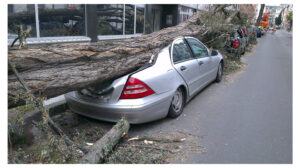
HIgh winds cause damage. Image credit: guenther3011 from Pixabay
Spiraling tornado winds race across the prairies, wreaking havoc in their terrestrial paths. Over the oceans, savage storm winds, or hurricanes, are given different names depending on where they occur. In the Atlantic and central Pacific, these wind storms are called hurricanes, but in the southern Pacific and Indian Ocean, hurricanes are called cyclones. In the northwestern Pacific Ocean, hurricanes are named typhoons. All of these powerful winds leave property destruction and often death in their paths.
Less severe winds over lakes and bays create spiraling waterspouts that pull water upward. Across deserts and dry plains similar spiraling winds form dust devils. During winter along the eastern slope of the Rocky Mountains, warm chinook winds regularly rush downhill. These strong winds sometimes raise the air temperature by more than 40°F in a few hours, rapidly melting snow and ice. In the mountains of Antarctica, katabatic winds rush downslope with destructive fury. The disruptive power of wind makes it a force to both fear and respect in any environment. But love is tough to muster.
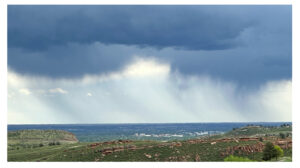
Wind transports the clouds that deliver moisture.
Yet wind has other sides to its character. Gentle breezes carry the scent of flowers and ease the intensity of summer heat. High overhead, winds deliver and deport the massive clouds that carry life-renewing loads of moisture to nearly all terrestrial environments.
Winds that sweep across rocks and land erode away rocks, often carrying fine silt, sand, and dust high into the atmosphere. Winds may carry this load of particles across thousands of miles, even across oceans, before depositing their loads. Loess soils and sand dunes are shaped and maintained by wind. And it is wind-borne dust from the Sahara that fertilizes and nourishes the Amazon rainforest.
In gusts and gales, gentle breezes and biting blasts, wind is constantly at work, carrying pollen and seeds for a myriad of plants. It transports the spores of moss, fungi and lichens around the planet, delivering the beginnings of life to new islands, glacial outwash plains and volcanic outfields. The winds themselves are home to a nearly unimaginable variety of tiny organisms, from microbes to spiders,the latter borne aloft on silken threads. These aeroplankton creatures are not the only organisms that sail in the winds.
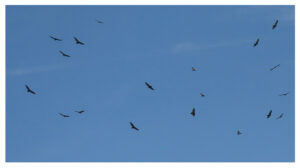
Turkey Vultures use a thermal updraft to gain altitude while migrating.
Over land, hawks and vultures soar high into the sky, their wings catching the updraft of thermals—columns of upward wind created by rising hot air. Similarly, winds over the ocean power the flight of many birds.
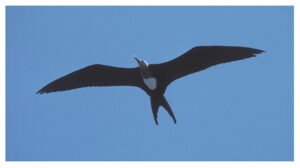
Magnificent Frigatebirds can sail hundreds of miles without flapping their wings, using the power of the wind for lift and transport.
In the tropics, magnificent frigatebirds sail aloft, effortlessly gliding hundreds of miles on ocean winds. Farther south, in the subAntarctic, birds with giant wingspans up to 11 feet, ride the relentless winds like airborne sailors. Some albatrosses glide over the waves for months, borne by the winds, they rarely bother to flap their wings or land, while traversing hundreds of miles of open ocean in search of food.
Many species of birds that migrate from one hemisphere to the other get help from wind too. Infrasounds are very low pitched sounds made by storms and by winds passing over mountain ranges or along continental shores. These sounds provide some migrants with audible clues that help them avoid storms and guide them in their planetary wandering. Changes in barometric pressure also alert migrant birds are able to changes in weather. This allows the birds to time their flights to take advantage of tail winds. Tailwinds can speed their flight and lessen the time and energy required to fly the thousands of miles between their winter and summer homes.
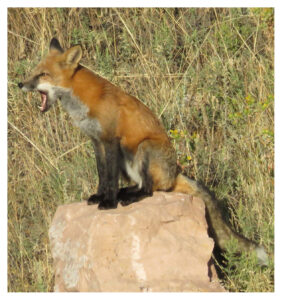
Foxes follow the scent of prey by traveling into the wind.
Many predators use the wind to find their prey. Prey animals downwind from a predator may detect the predator’s scent borne toward them by the wind. So, rather than walking with the wind at their back, blowing their scent toward their prey, foxes, coyotes, bears, and lions sniff the wind, then head right into it, upwind, towards the scent of unsuspecting prey.
One remarkable sea creature, the velella (a sea anemone relative) has a sail it uses to catch the wind and travel the sea surface. Humans most likely didn’t get the idea for sail boats from this strange animal, but like the velella, we humans have used wind to travel and explore our planet. From small sail boats to giant sailing ships, we humans have used wind to travel and explore our planet. For centuries, wind was the only source of power for fishing boats and whaling ships.
Even today, when most fishing boats and ships are powered by oil, fisherman still depend on the wind for their bounty. That is because the areas of the ocean where fishing is best are locations where wind and currents push surface waters along, drawing cold water upward from deep in the ocean. This upwelling brings nutrient-rich waters to the surface creating ideal conditions for phytoplankton, zooplankton, fish and other marine life to thrive.

Over 70,800 wind turbines provided more than 10% of electricity used in the US in 2025.
For centuries, humans relied on wind to turn the windmills built to remove the hulls from grains, grind the seeds into flour, and pump water from the ground. Today, humans use wind turbines to generate electricity to power all kinds of machines, from electric mills to computers.
Wind is a bit like a two-year old child. Prone to tantrums and wild belligerence, but also able to deliver life, delight, joy and hope. Even if it is tough to love at times, it seems we should love it anyway. We and all of life on Earth depend on the wind.
Now, if it would just stop blowing for a little while.
Test your wind knowledge with my Wind Challenge Crossword.